
From Boulevards to Back Streets: Hailing Down Surrealism
By Tom Miller
A little over a century ago, Andre Breton put pen to paper. Eighty years later, Dave Rudman did the same. The former, a Parisian intellectual, writer, poet and collector, whose artistic convictions were so strong he was expelled from the French Communist Party. The latter, a hunched, disheveled, alcoholic, psychotic, black-cab driver with nothing left to lose.
A tale as old as time.
The former, a medical student conscripted into a military hospital during the Great War, igniting an interest in mental illness that would burn and singe the corners of his work for decades. The latter, battling on the front lines of an internal war with his own mind, and an external one with his ex-wife’s divorce lawyer.
The latter, fictional. The former, less so.
Breton, endeavouring to understand the brutality of the war, sought answers in Freud and the unconscious. Dave, reeling from the events of 9/11, sought liquid cures. When this yielded no aid, he too turned to the unconscious, not Freud’s but his own. Maybe these two men are not so different after all.
Breton understood that the unconscious is the one thing we cannot fully understand, and therefore must treat it with a certain detached reverence. Follow the impulses, reproduce the images, unapologetically bring to life the glimpses of yourself so that they do not remain stuck, rotting as mere glimpses, but emerge from the private into the universal.
Dave however, sought certainty in the unconscious. As the world changed at a confounding rate around him, as the fixed contours became warped, he found comfort in what he knew best, his knowledge. The Knowledge.
Writing for the Guardian, M John Harrison describes Dave as ‘trying to come back from the brink of something without quite knowing what it is.’ Where the majority of people might try to plug this gap with food, sex, football, or a career, Dave Rudman plugs it with the one thing he has always excelled at, navigating London in a black cab.
While their stories are worlds apart, Breton and Dave have one unlikely thing in common; both are the sole creator of a manifesto which would change the course of their respective worlds. In October 1924 André Breton wrote Manifeste du surréalisme. More than simply an artistic rule book, the manifesto outlined a new way of life. As Breton alluringly labelled it, ‘a new vice’. It was a rebellion against the artistic establishment, a rebellion against absolute truth.
Breton bemoans that ‘logical methods are applicable only to solving problems of secondary interest.’ Our waking moments, shackled by the sensible, logical chains of modern society are deemed ‘interferences’, dampening the power of our imaginations and dreams. He tells the story of Saint-Pol-Roux, who posted a notice on the door of his house at night before going to sleep which read ‘the poet is working.’
Surrealism is defined in the manifesto once and for all as ‘psychic automation in its pure state, by which one proposes to express the actual functioning of thought. Dictated by thought, in the absence of any control exercised by reason, exempt from any aesthetic or moral concern.’ Reminiscent of transcendental meditation, or Dionysus’ negation, Surrealism is a way to bypass the sullied canvas of our world to find a place of true expression and feeling. Breton aims to move beyond our dualistic existence, which flits between dream and reality, towards a utopic synthesis of the two. Towards surreality.
The writing of manifestos was not new to the 20th century. As Alex Danchev writes, the manifesto was originally the province of Kings and Princes, later hijacked by the oppressed in 17th century England by the Diggers and Levellers, and immortalised by Marx and Engels with the communist manifesto in 1848. Though primarily a political document, it kickstarted the development of modernist manifestos in the early 20th century, produced as a work of art in and of itself. A simultaneous performance and statement.
Most notably, Marinetti’s Futurist manifesto in 1909 provocatively called for the destruction of the past, and the desire to create a new future with an emphasis on technological progress and the beauty of war. This would kickstart a rapid dialogue with various branching offspring from Dadaism to Cubism, to Surrealism and beyond.
The Surrealist Manifesto is very thorough and academic, almost scientific in style. However it does finish with an artistic flourish and the declaration ‘you are no longer trembling, carcass’. This immediately stood out to me as the only direct quote in the whole text. A quick investigation revealed Nietzsche referencing the origin of the phrase in The Gay Science, telling the story of French military general Henri de la Tour.
La Tour was later venerated by Napoleon with the likes of Alexander the Great and Julius Caesar as one of history’s great men, but, upon approaching one particular battle his body could not stop trembling. He then talked to his body as one talks to a servant. He said to it: ‘You tremble, carcass; but if you knew where I am taking you right now, you would tremble a lot more.’
This relates to Nietzsche’s conception of fearlessness as freedom via overcoming one’s fears. The body is scared, the natural inclination is to turn away, but the mind can proactively overpower this fear. One must affirm the suffering rather than avoid it.
Breton however, diverts from this attitude with his reassuring words. The carcass no longer trembles, because through the application of surrealist techniques, it is free from the taken for granted ailments of everyday life. There is no battle to force your body towards whatever horror awaits it. There is no looming darkness, as the subject has raised itself above material worries. The key difference is whether you believe it is more prudent to face one’s fears head on to overcome them, or to transcend them altogether.
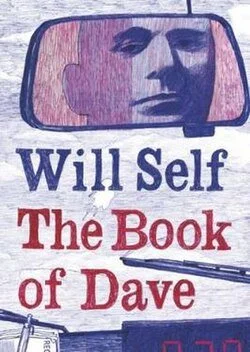
The Book of Dave by Will Self.
Dave Rudman’s manifesto is worlds apart. In The Book of Dave, Will Self tells the story of alternating time periods. From 1987-2006 we follow the story of Dave Rudman, a teenager whose friends left for University while he stayed in London to follow in the footsteps of his father and become a black cab driver. Later he meets Michelle, and in a moment of desperation their son is conceived and the pair marry. Dave’s mental state rapidly declines as his divorce drags on and he is first denied custody and later stuck with a restraining order.
Dave takes refuge in The Knowledge, and the intricacies of the London streets he knows so well. He repeats routes over and over in his mind. After a chance encounter with an old acquaintance in a takeaway, he decides to write a book. If he isn’t able to be a father to Carl in this life, his worldly advice, his knowledge, would need to live on. In a single metal book he transfers the jumbled ravings from his mind to the page, and buries it in the garden of his son’s new home. If manifestoing is a performance, then this certainly eclipses publishing in a French magazine.
The concurrent story in The Book of Dave is 500 years later. Rising sea levels have wiped out London as we know it and a new society is in its infancy. Its guiding principles, pillars of society and religion are based entirely on Dave Rudman’s rantings, found in that metal book deep in the earth. Food is referred to only as curry. The men, or dads, live on one side of the village, the women, or mums, on the other. The children stay with their mums for half the week, and with their dads for the rest, each week there is a ceremonial changeover. The sun in the sky is known as the great headlight and when it is dipped beyond the horizon, the dashboard of stars appears.
The novel explores the dangers of blindly following a doctrine. New London’s misogyny and brutality is permitted and enforced because of some words written by a psychotic alcoholic five-hundred years prior. While Self issues a warning against blind faith, he also speaks to the power of the manifesto. How a single text, written for a single person could strike such a powerful chord and be re-interpreted as the building blocks for a new future. Dave Rudman’s manifesto inspired a whole new world.
The Surrealist Manifesto on the other hand inspired some of the twentieth century’s most influential art. From the films of Luis Bunuel, Un Chien Andalou and The Discreet Charm of the Bourgoisie, to the paintings of Salvador Dali and Rene Magritte, to the fiction of Leonoara Carrington.
In the Third Manifesto of Surrealism, written by Breton in conjunction with Leo Trotsky and Diego Rivera, the movement laid bare its political allegiances. There was still an emphasis on artistic expression, but it was shown to be indelibly intertwined with the quest for progress. ‘True art, which is not content to play variations on ready-made models but rather insists on expressing the inner needs of man and of mankind in its time - true art is unable not to be revolutionary, not to aspire to a complete and radical reconstruction of society’. The Surrealist Manifesto is not just artistic but revolutionary and prescriptive.
It is debatable whether the works of art listed above can be called what the Third Manifesto describes as ‘true art’. Un Chien Andalou changed cinema and inspired many future works, including even the Pixie’s Debaser, but did it re-structure our society?
The question therefore, that rears its head from between the texts is: is Dave Rudman the true prince of Surrealism? If, as Breton and Trotsky put it, ‘the role of the artist in capitalist society is determined by the conflict between the individual and various social forms which are hostile to him’ then who fits this profile better?
Dave Rudman was beaten down by society, he was separated from his beloved son and plunged into darkness. The only way he could escape the prison society had built around him was expressing his unconscious mind, his knowledge, in an intense form of psychic automation. This would inadvertently go on to re-structure society in the most dramatic way. Dave Rudman, without any knowledge of him doing so, fulfilled the legacy of surrealism better than Dali, Bunuel or Breton himself. Breton achieved only in illustrating a new world, but failed to bring it about.
