
Film, Book, Other: Treasure and Time
What we watched, read, and listened to in February.
By Tom Miller
Film
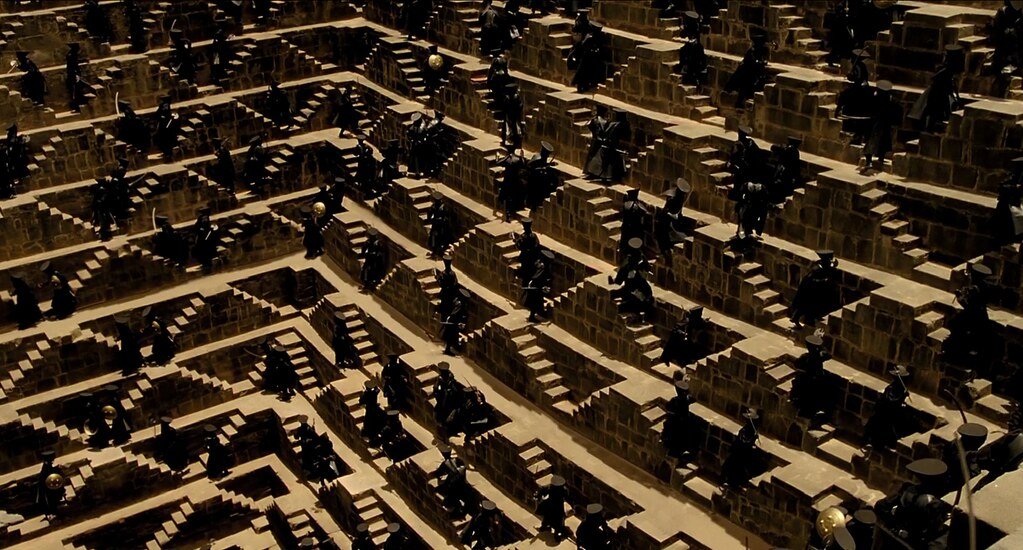
The Fall (2004) Dir. by Tarsem Singh
Tarsem Singh's The Fall has long lived on the fringes of my consciousness. As a teenager I regularly watched Cinefix top ten lists on Youtube, where the film would invariably be mentioned every few months. Dutifully it spent the intervening years, anchored to the bottom of my watchlist, patiently watching others come and go without a syllable of complaint. In February, for no particular reason, I decided to reward its patience, and free it from the shackles of an unrealised future.
The first thing to note, is the sheer scale and richness of the cinematography. It is without a doubt one of the best looking films I have ever seen, and lived up to the fragments I recall from Cinefix's descriptions. Film's uniqueness lies in its ability to tell stories with images alone, and during The Fall I found myself thinking I bet I could watch this with no sound at all, and still feel its effects.
The choice of setting, a hospital in 1920s California, feels hazy and un-real. A transitory simulacra, too bright, too airy, like catching smoke. It feels like a film I might have watched at my Grandparent's house as a child. Its unreality gives a sheen of comfort and nostalgia. But if Don Draper has taught me anything it's that in Greek, nostalgia literally means the pain from an old wound, and that pain is central to The Fall, throbbing and sharp.
Roy, an injured stuntman, befriends Alexandria, a young girl, by recounting a wondrous tale of adventure in which a gang of heroes journey through the desert to enact their revenge on a tyrannical emperor. The true purpose of this friendship however is so Roy can trick Alexandria into acquiring morphine for him, to end his life. Like the climax of Madame Bovary, but all the more brutal as the victim of the lie is merely a child. While Emma Bovary uses romance to trick her way to her death, Roy has to rely on the power of storytelling.
The fairy tale adds to the feeling of familiarity. Across continents, throughout all of history, certain images and narratives pervade and persist. The film plays out like a thought experiment. As if the true test of a collective unconscious is whether these archetypal images have the power to win over a young girl, with whom Roy has zero similarities, just by engaging her imagination. Singh leaves the question in the balance, as Roy ultimately succeeds in tricking Alexandria, but not in committing suicide. His declining emotional state, and how it is weaved through the tragedy of his tale is powerfully done, especially in its effects on Alexandria, and the beauty of the visuals and the vibrancy of the colours palette can do little to protect us from her anguish.
To loosely book-end my experience watching The Fall, I watched the music video for REM's Losing My Religion, directed by Singh earlier in his career. The video features a rundown shack with peeling walls, interiors not too dissimilar to an Andrei Tarkovsky film, another mainstay of Cinefix top ten lists. Seemingly I am haunted by flashes of images, from Soviet Russia, to Ancient India, to 1920s California and 19th century France. Somehow, somewhere they connect, and breathe new life into one another. I am sure.
Book
Hard-boiled Wonderland and the End of the World by Haruki Murakami
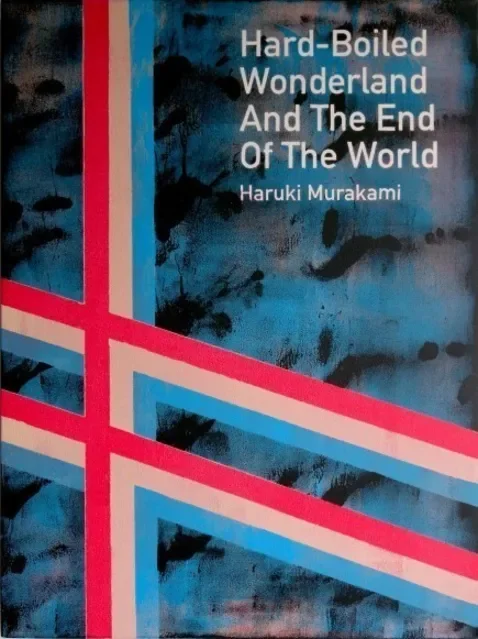
I realised after reading Haruki Murakami's Hard-Boiled Wonderland and the End of the World that he may now hold the esteemed title of my most read author. I wouldn't say he is my favourite author, his books are peppered with issues, and often contain strands of unnecessary unpleasantness, which he stubbornly forces on the reader. Why then, do I keep going back?
Hard-Boiled Wonderland sums up the contradiction of his appeal well. The book is split into two narratives, in the first an agent involved in a war of information takes a new case which quickly spirals out of his control. He soon realises he is the centre of a larger game for which he'd never been taught the rules. This theme, as well as the character's wry asides and cynical, nonchalant attitude to the insanity happening around him are clear references to the hard-boiled film noir detective stories alluded to in the title. Contending with this is the futuristic Tokyo setting where strange creatures patrol the sewers, information is fought over as an enigmatic commodity, and a scientist protects his technology which removes sound completely from nefarious hands. The atmosphere is a melting pot of tropes we are familiar with, dressed in unfamiliar disguises.
In the second strand, a narrator arrives in an otherworldly village with a complex set of rules and cast of characters, to read dreams from the skulls of animals in a library. Images from both halves melt and seep into one another and we know instinctively that they are crucial, even if we can't quite articulate their exact purpose. Like between Roy's fantasy and his reality in The Fall, the Jungian archetypal images indelibly link the two worlds. They douse them in mist and gently serenade them with soft chimes.
At one point, the protagonist experiences a memory he thinks he has been forced to forgot, but it becomes clear the memory never existed in the first place, and he is experiencing a glitch, a version of a memory he is yet to have in a different life. Similar to Denis Villenueve in Arrival, Murakami uses this manipulation of temporality to snatch us from the comfort of full awareness. Just as we think we are working the narrative out, it evades our grasp.
We know from the start that the two narratives will become one, but how it gets there is beyond us. Towards the end, our protagonist must make the choice between death in the reality he knows, or eternal life in the reality he has no knowledge of. The eternal life is placid and warm, without troubles, but his mind and his humanity will rot. The choice is about whether to embrace our alienation as a subject and recognise that the struggle of being human is what makes life so valuable, or giving in. The answer in Hard-boiled Wonderland however, is to accept neither option, but stand and fight for a more nuanced version of whatever new reality is forced upon you.
Murakami's worlds are difficult to articulate, but always uniquely thought provoking. I feel when exiting these worlds, that they have spoken to something within me I am not fully aware of, and for that, many sins can be forgiven.
Other
Treasure by Cocteau Twins & Pacific Coast Blue by Dennis Wilson
In an interview with nicksmusictaste, Geordie Greep tactfully questioned the host's belief that Cocteau Twins' Heaven or Las Vegas is the greatest album of all time. Geordie articulated something I have often thought myself, his concern with the ubiquity of certain pieces of art. Why are some albums unquestionably the best an artist has to offer? Most 'top X albums of all time' lists you come across will invariably contain a mixture of the same 10 or 20 albums towards the top. Marvin Gaye's What's Going On, Stevie Wonder's Songs in the Key of Life, Lauryn Hill's The Miseducation of Lauryn Hill, and The Beach Boys' Pet Sounds (another specific example cited in the interview).
Geordie explained that he prefers Cocteau Twins' earlier, darker, more unique albums, specifically Treasure, and that this deserves as much, if not more recognition that HoLV. He was not only speaking to the interviewer, but also to me. I have listened to HoLV based on its reputation, but to no other Cocteau Twins works. So I decided to right that wrong and open up the Treasure chest. The album delivers a range of melodies that can only be described as haunting, but at the same time futuristic, both alien and ghostly. Similar to Hard-Boiled Wonderland, lines are drawn as far as possible from one another, and the work is left to dance its way across the murky space in between.
…something takes me by the hand. An apparition, or creature from another world? Something dead and gone from then, or something more alive than I can yet understand, from some other place, some other time. It leads me to a cathedral, crumbling into the cosmos, lit by starlight. Everything is chrome and brown, everything is rotting and glistening. I don't quite trust where they are taking me will be better, but it might be. I feel as though I am about to wake up and be disappointed, but her voice keeps me gently rocking in an enchanted haze. The words mean nothing, but I feel them around me. They buzz, they shimmer and they die. I am in the Roadhouse, I sip my beer, I smoke my cigarette. The credits role. They let go of my hand...
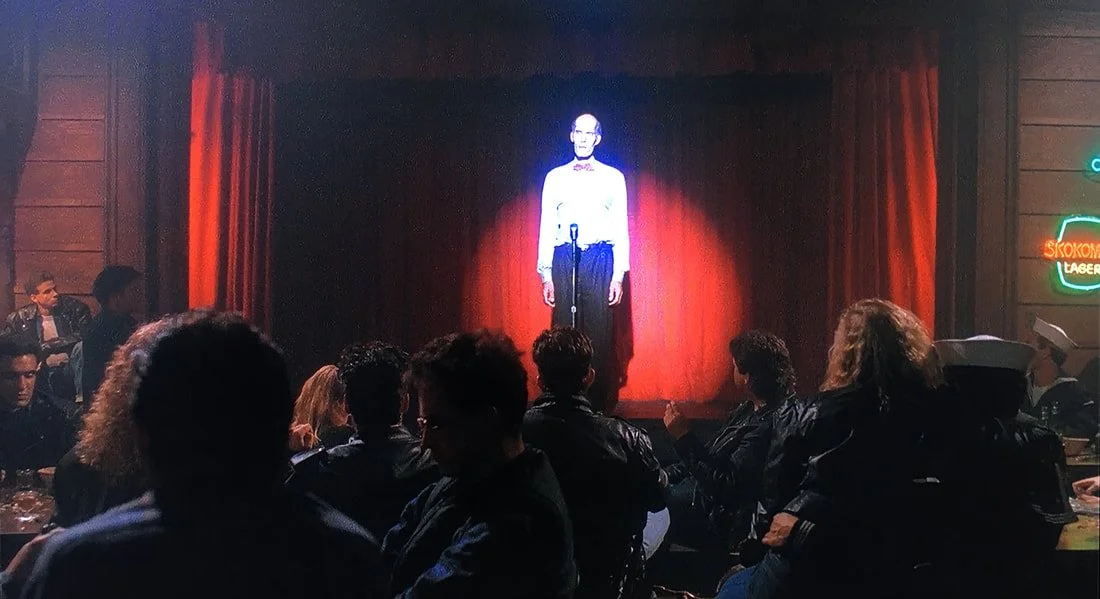
Treasure feels as thought it should be enjoyed right here…
I was better acquainted with The Beach Boys' back-catalogue than Cocteau Twins before seeing the interview, however the mention of Pet Sounds prompted me to remember of an episode of The Blindboy Podcast, in which Blindboy investigates the effects Dennis Wilson's solo work had on music history. So I carried out a similar exercise, and to fight against engrained ubiquity, listened to Dennis Wilson's Pacific Ocean Blues.
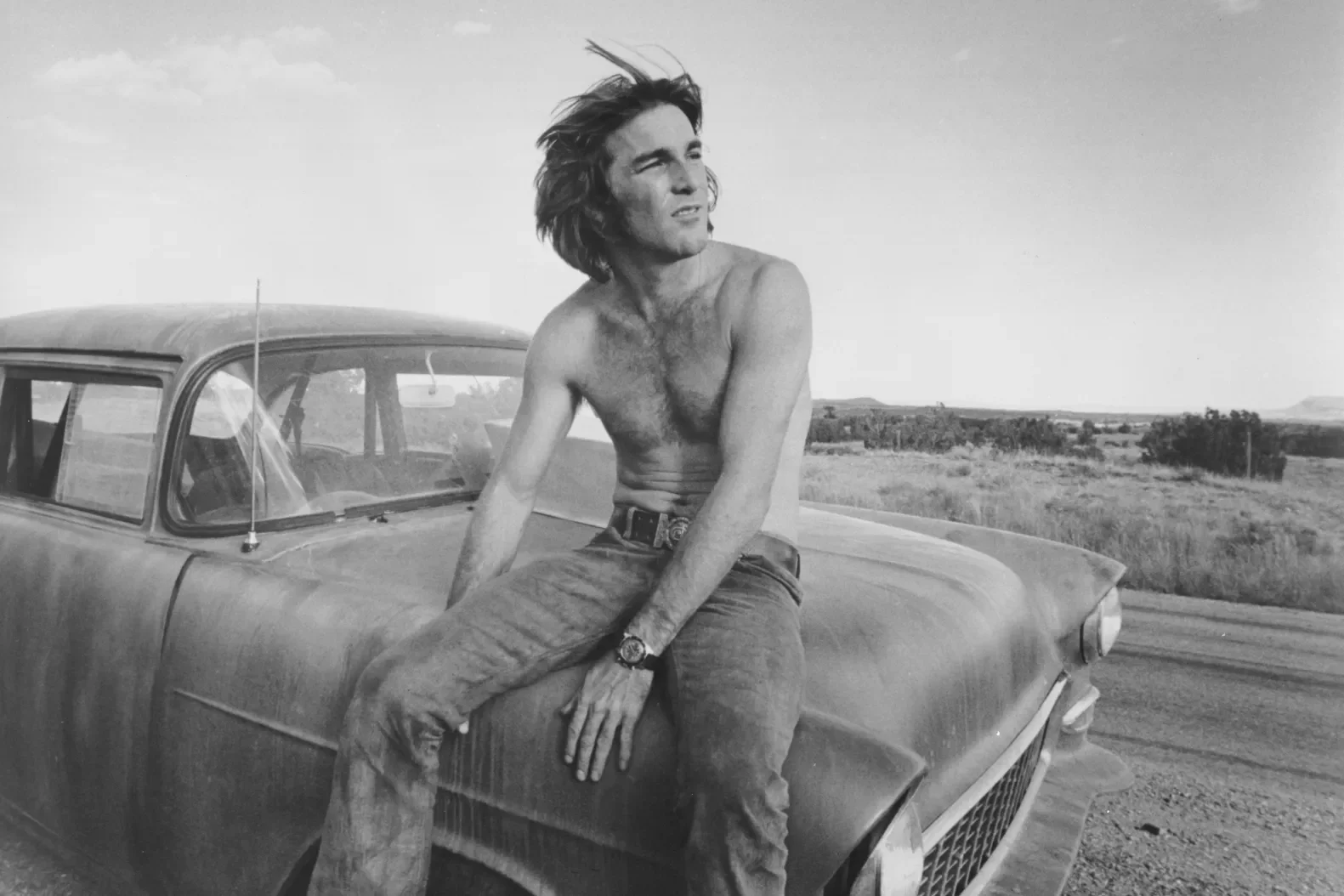
The standout for me is Time. A yearning, regretful howl builds without linear path. I imagine Dennis running through the woods topless, leaning back and crying to to the night sky, just as vividly as him leaning in and whispering in slurred, hot breath, filling my ear with empty platitudes, and nose with a stale musk. The lyrics themselves tell us he wants to change, but the pain in their delivery tells us he knows he can't.
Around two thirds in, he gives up his own pleading, the lyrics fade into the background and the instruments erupt into clanging jumble of intensity that makes you want to scowl. This is Dennis' interiority articulated through sound, harsh and powerful, erratic with a bubbling electricity that sparks and fades. The build up and drop on Time reminds me of LCD Soundystem's Dance Yourself Clean. Dennis' well-documented issues with drugs and alcohol, and generally wild lifestyle however, perhaps suggests the idea one can always 'dance themselves clean' is naive.
