
P.S: The Bus Driver
Following an unlikely Surrealist hero into the Geography of Fiction
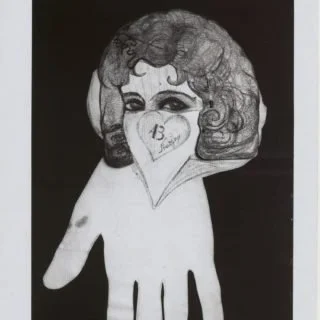
The relationship between fiction and place is an intriguing one. The reader builds the world in their mind alongside the characters on the page, and there is an inescapable level of disconnect between the author's vision and the reader's. In invented worlds the relationship is a simple dichotomy in which we rely entirely on the author's craftsmanship and our own imagination to construct the world around us. Fiction set in existing locations however, creates a much more interesting mix.
We may never have been to the city, the country, the continent in which the story is set, or we may know each and every street the protagonist's feet wander down. Even if we are familiar, the story may take place in a different time period entirely and we strain ourselves in search of familiarity and difference. We may have been to the particular setting as a child and find the story awakens memories long confined to the dungeons of our minds.
Herein lies another link between Breton and The Book of Dave. A semi-fictionalised version of Breton himself stars as the main character in Nadja, a whirlwind of a book in which he pursues the mysterious Nadja through the streets of Paris. Matthew Beaumont, in his book The Walker discusses Breton's protagonist as one Modernity's anti-heroes who, through living at the level of the pavement, is best placed to grasp not only the city's alienating but also its liberating possibilities.
Will Self, author of The Book of Dave is also a lecturer in Psychogeography, which describes the effect of a geographical location on the emotions and behaviour of individuals. Coined by Marxist theorist Guy Debord in 1955, it suggested playful and inventive ways of navigating the urban environment to examine its architecture and spaces, moving away from functionality.
Both demonstrate a clear affinity for not taking the environments around us for granted, and moving through them with engaged artistic purpose. The fictional, urban application of Breton's surrealist roots in Nadja is a perfect example of a Psychogeographic exercise that would later interest Self.
Unintentionally, I have also been emulating both authors for years. Something I try to do when visiting somewhere, particularly a city, is read a work of fiction set in that city. Nadja in Paris, Knut Hamsun's Hunger in Oslo, Kerouac's On the Road on a US road trip, Pynchon's The Crying of Lot 49 in San Francisco, and Tan Twan Eng's The Garden of Evening Mists in Malaysia. It gives me great pleasure when my fictional visions of a place collide with the reality. When I can learn of a street, a church, a bar on the page and stumble across it as if the power of my mind has summoned it into existence. Fiction, grasping at a truth out of reach to mere histories, is far superior at exposing the true essence of a place. The feel of a city hides patiently somewhere between its facts.
The most entangled example of this was reading John Berger's The Red Tenda of Bologna, which blurs the lines between fiction and non-fiction into obscurity. Berger drifts through a dreamy, amorphous version of Bologna, exploring the architecture and the art that fills the city, all the while imbuing the streets with memories of his uncle, forcing them to become more than just memories. He floats, enchanted through a liminal, ancient space, at once absorbing and moulding his surroundings.
I pushed myself to further explore this relationship between fiction and place, not only through reading, but also writing. The Bus Driver is part of a series of short stories, written following our US road trip last year. One story for each stop on the route, this one in particular being Monterey. Each story is based on people we met, conversations we overheard, things we saw and is rooted firmly in its specific place. For the second exercise, the freedom of Berger's writing inspired me to leave my phone at home, arm myself with a notebook and pen, and go out into the streets of London, to see what I might find.
The Bus Driver
‘The way I see it, there’s fishermen… and then there’s bus drivers.’
The circle broke into laughter. Carl, Davey, Jonny and Scoot. All of them laughing at the same joke in the same way with the same audience as each yesterday and every tomorrow. It jolted me from my own little world back to the conversation. Sadly.
I’d been watching Al behind the counter, speaking to a group of tourists, European types with skinny arms and full backpacks.
‘I wish you hadn’t done that,’ he said, looking the leader dead in the eye and sighing.
‘I told you to wait, I told you I was gonna get you on that boat. Those bastards take twenty-five percent.’
Al was never what you might call good with people. Sometimes I volunteered to take his shift on the counter to avoid situations just like this. I looked at the gnarled smiles and black teeth of those around me and wished I had done today. When it came to the sea on the other hand, no one could get close. My old man used to say something went wrong when the good lord created Al, his finger slipped at the last second and chose man instead of fish.
I remember the first time I went out on the trawler with the two of them. Al had always scared me as a child, he spoke to me in rough grunts with stone faced grimness. But on the deck of that boat he moved so elegantly. He was at one with the machine, with the waves, he handled the nets with such delicate precision and knew just where and when to cast them.
I’ve tried to emulate that display each time I go out to fish, but unsparingly fall short. Dad was always supportive, ‘it’ll come,’ he said. But now, there was no one. The rest of them would never sink to the level of encouragement. In their minds they are helping. Tough love, hardening me up, just like they had it. Yeah right.
‘D’you hear what I said Junior? There’s fishermen…and then there’s bus drivers.’
Carl repeated the joke and slapped me on the back. I nodded and gave a polite chuckle.
‘Are you working tomorrow?’ Davey asked Scoot.
‘I sure am, it’ll be my fiftieth year on the water next week. Only missed nine days in all that time. Nine days. One when Eileen went into labour…’
‘Bullshit nine days!’ Interrupted Jonny, ‘you’ve missed nine days this week goddammit.’
‘Anyway you should be retired by now, Scoot. Since I retired I’ve been spending a lot more time with the grandkids. It’s great, really wholesome you know?’
‘They came in here just yesterday asking if I could convince you to come back to work.’
The patterns and the rhythms and the laughter continued. I disappeared somewhere else again.
‘Junior, we’re ready.’ Al called from the till, waving me over, ‘full boat, water’s nice and choppy.’
I rose and muttered goodbyes to the circle who lingered on their stools and would linger there as long as they damn well liked.
Stepping onto the rotting wood of the pier, I looked up and saw the sun failing to pierce the grey sky. I walked towards the boat, and surveyed the crowds milling around waiting to be let aboard. They looked like the usual bunch, a split of families from the midwest, couples from Asia with ridiculous cameras and those European types again in large groups. At least the latter were curious and respectful, Americans were the worst, thinking they know everything when they’ve never seen the sea in their lives. I don’t come to Oklahoma and lecture you on dust, do I?
I opened the gate and climbed on to the boat, watching the rats scurry and jostle for what they think is the best position. Once everyone was seated I gestured to the lifejackets and safety signs and took my position behind the controls.
‘Oh and one last announcement everybody,’ I said over the tannoy, ‘it’s gonna be a bumpy one today so be prepared. The front will be worse than the back so position yourselves accordingly. Try and avoid it but if you do feel the need to throw up, make sure you do off the back of the boat. Not in the restroom. The restroom is tiny and will only make it worse being trapped in a box while being thrown about. Okay, everyone got that? Let’s go see some whales.’
The boat rolled along the waves and I robotically pointed out a few seals and birds. After an hour or so, we reached the area where whales were almost guaranteed. Reaching for the tannoy, I killed the engine.
‘Now during this time of year, we are most likely to see humpbacks. They come up here to feed on anchovies, sardines, and krill while it’s warm. But from December to March, they move down to Mexico to mate and raise their calves. They’ll weigh about forty tonnes, but are still quite flexible. If we’re lucky we’ll see them do some acrobatics, jumping out the water for attention or slapping their tails.’
But we were not lucky. The boat lolled gently and looked left and right. The tourists had all risen from their seats and were crammed down the sides of the boat against the railings. I tried to ignore any questioning turns of the head in my direction.
I stared at the sea and its void stared back. A black and brown sloshing block of nothingness swirled in every direction.
‘Come on,’ I whispered, ‘where are you?’
‘Looks like they’re a bit shy today so we’ll move over to the East.’
I took the radio and asked the other boats if they were aware of any active areas, but all that greeted me was a hum of silence. I gave up and increased the throttle.
The boat slunk from patch to patch but the sea was resolute and unyielding, the surface only ever broken by the odd bird. This had never happened before. It’s a good fucking job we took down the full refund if no whales spotted sign, but I still dreaded the humiliation that awaited me back at shore. Can’t even drive a bus, let alone fish.
The customers were growing restless. I cleared my throat and gripped the throttle hard.
‘Hold on tight folks.’
The engine whined as the bow skipped across the water. A few small screams came from the back as they were shunted backwards. The wind tore at skin and rattled bones. I allowed myself a small smile.
After ten minutes I cut the engine and let the boat drift. I had never been this far out with customers, in fact it was forbidden. The unpredictable tide posed a risk not worth taking.
‘Now while we wait for these shy boys and girls to show their faces, does anyone have any questions?’ I poked my head out of the driver window and looked down at the crowd. Many of the faces were tinged with green. At least if they were worrying about their stomachs they wouldn’t be as concerned with my failures.
‘Nobody?’
A woman raised her hand. Footsteps sounded to my left and I turned to see a passenger looking haggard. I gestured to him to wait.
‘Yes miss.’
She lowered her hand and spoke slowly in a thick Irish accent, ‘what do you know about the whales who wear salmon as hats?’
I just looked at her and furrowed my brow.
‘Excuse me,’ said the man behind me, ‘the toilet’s blocked.’
I followed him out of the cabin to the restroom where thick chunks of dark orangey brown vomit pulsated in the bowl of the toilet. The perpetrator had obviously not made it quite in time as the walls and floor were spattered with the initial, more liquid blast. I sighed deeply.
‘It wasn’t me,’ the man added sheepishly.
‘I can’t clean this now, I'm sorry but you’ll have to hold it in or go off the back and I’ll ask everyone to face the other way.’ I returned to my cabin before he could protest.
I locked the door and gave the sea twenty minutes to oblige me. After seventeen, I gave up and turned the boat towards the shore. Now that the toilet was out of commission, what harm was a bit of sickness? I made up some excuse about needing to be back by a certain time to refuel, and flew like I had never flown before. The passengers were resigned to their fate, sitting in silence, eyes tightly closed, concentrating only on survival.
‘And here we are folks, thanks for joining us. Sorry about…well… you know.’
I watched them shuffle off the boat with wide eyes and then I spied Carl, Davey, Jonny, Scoot and Al standing outside the shop, in exactly the same order they were sitting this morning. Gesticulating, laughing.
I did my best to avoid them for the rest of the day and hid in the darkest corner of a bar I could find. Once the sun had set and the pier emptied, I went back to the boat with a pair of rubber gloves, got down on my hands and knees, and scrubbed. It was oddly peaceful. Just me and the gentle sway of the boat. The air had cooled and I took comfort in the repetitive movements and steady progress.
Would a bus driver have to clean up the sick himself?
The final remnants were struck from the cubicle, I poured some bleach into the bowl and flushed. Standing with a sigh I removed my rubber gloves and threw them into the bin with a satisfying snap. What sounded like a knock rang from the bow of the boat. I raised my head, nothing. There it was again. I walked to the end and peered over.
A huge spout of water erupted from right below me and I jumped backwards. A humpback whale rose from below the gentle waves. Here, in the harbour, impossibly close. It lifted its tail high and proud and slapped it down on the surface. Water sprayed up again and drenched me. My hair fell, wet and stringy into my eyes. I pushed it away and peered back over the bow. The whale was gone.
I turned and looked to the pier. A light flickered. It was empty, completely and utterly empty.
